Tuesday, 26 September 2017

Kanyakumari Wildlife Sanctuary

Kanyakumari Wildlife Sanctuary

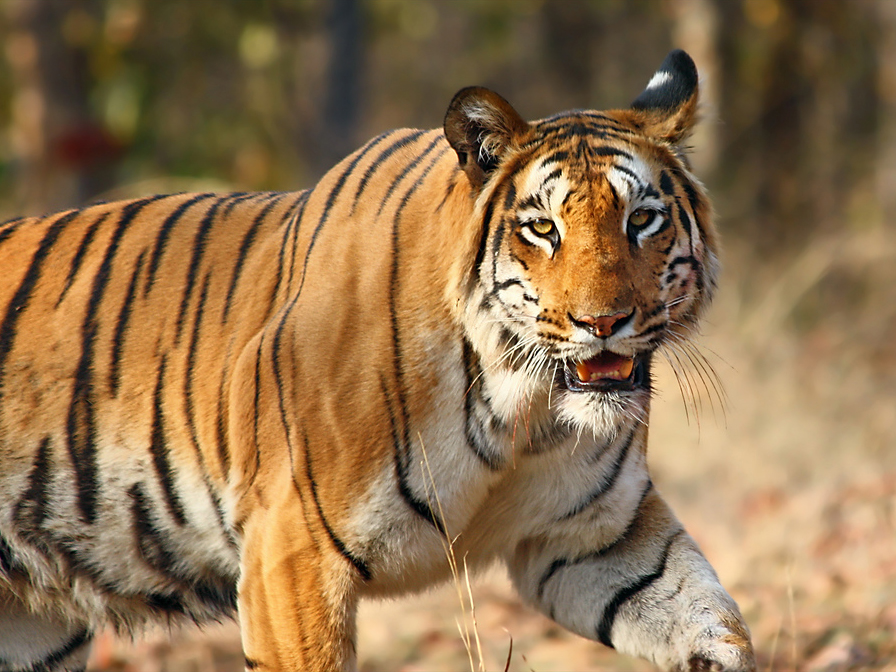
Kanyakumari Wildlife Sanctuary is a 402.4 km2 (155.4 sq mi) protected area in Kanyakumari district, Tamil Nadu South India declared in February 2008. The area is a tiger habitat. The virgin forests of Kanyakumari District got transferred from Kerala to Tamil Nadu on the 1st November 1956 as a result of the state reorganization. Kanyakumari Forest Division came into existence from 1st April 1977, with the headquarters at Nagercoil. Government Reserved Forests occupy an area of 50486 ha, i.e., 30.2% of the total geographic area of the Kanyakumari District.
Image result for kanyakumari wildlife sanctuary
Related image
Image result for kanyakumari wildlife sanctuary
Kanyakumari Wildlife sanctuary with adjacent areas of Kalakkad Mundanthurai Tiger Reserve and Neyyar Wildlife Sanctuary of Kerala State constitutes the southernmost tip of Western Ghats. The natural vegetation of this region represents biomes ranging from southern thorn forests, dry deciduous, moist deciduous, semi evergreen forests to ever green hill sholas with grassy downs. The tract is exceedingly rich in wildlife harbouring a variety of animals. The avifauna, the reptilian and amphibian fauna of this region are also rich and diverse.
The Kanyakumari Wildlife Sanctuary is located in Kanyakumari, commonly known to the rest of the country as the southernmost tip of India. This tip of the Indian peninsula is a unique geographic point as it is one of a handful of places, if not the only, to be surrounded by all three of the sub-continent's vast oceans – the Bay of Bengal, Indian Ocean and the Arabian Sea. This, in combination with the fact that the sanctuary touches the southern tip of the Western Ghats is cause for - albeit understandably – the distinct and highly rare quality and combination of its biosphere.
Image result for kanyakumari wildlife sanctuary
Being surrounded by three major oceans has a direct and obvious effect on its monsoon. The sanctuary receives extremely heavy rainfall of 1369 mm each year which is both unevenly and oddly distributed. Tropical wet evergreen forests and southern thorn scrub forests are the extremes that form the spectrum of vegetation in this sanctuary. The variation in forest type is mainly due to the pattern of the monsoon. At the Kanyakumari Wildlife Sanctuary is a whopping 427 species of Indian plants, of which 123 are found in the state and 62 are endemic to Tamil Nadu.
Image result for kanyakumari wildlife sanctuary
In Upper Kodaiyar and other craggy regions of the Tirunelveli District, where the sanctuary lies, you will find a particularly interesting plant called Hill arecanut. It is an endemic palm occurring in these locales. In this category are also two other palms found in abundance   - the Arenga wightii and Poanaca docksonii. They yield a deadly brew that is locally known as toddy. Toddy is simply an alcohol made out of the tender water of these palms by fermentation; the toddy from these palms are glorified, relished and sought after by the tribals in the area. In fact, an interesting fact of the forests in Kanyakumari is that they are said to be more than 70 million old. Now that’s called an age old area, which has been developed.
The Kanyakumari Wildlife Sanctuary is a crucial wildlife corridor with exceptionally high biodiversity. Inevitably, it is home to several species that are endangered, such as the Indian rock python, lion-tailed macaque, mouse deer, Nilgiri Tahr, Sambar deer, Indian bison and elephant.
Image result for kanyakumari wildlife sanctuary
Sadly, construction of hydel projects, encroachment, conversion of forest to farmland, poaching and poisoning have cause many species like tigers, panthers, black buck and deer to dwindle. Nonetheless, animal species that continue to be commonly spotted at the Kanyakumari Wildlife Sanctuary are bonnet macaque, jackal, Indian fox, leopard, small Indian civet, Indian chevrotain, otter, sloth bear, large brown flying squirrel, pangolin and flying fox among many others.
The Kanyakumari Sanctuary is simply fantastic for wildlife viewing and nature walks; it is also a unique experience to see the meeting point of the three main oceans. This is considered as one of nature's most wonderful phenomena, the blending of their waters and sand; a must do for all who visit the south of India and compelling in its own right to other travelers as well.

Wildlife
The vegetation and flora of Kanyakumari sanctuary are exceptional because of extraordinary variety of species occurring within a small area. Kanyakumari Wildlife Sanctuary is floristically one of the richest areas in our country harbouring not less than 3500 species of flowering plants. The IUCN has identified 11 plant species as critically endangered, 12 species as endangered, and 21 species as vulnerable.   This indicates the fragile nature of the ecosystem. However the floral diversity is one of uniqueness of the forest. 
The area is a wildlife corridor with high biodiversity, and in addition to tigers, is home to  threatened species: Indian Bison, elephant, Indian Rock Python, Lion-tailed Macaque, Mouse deer, Nilgiri Tahr and Sambar deer.

Kalakad WildLife Sanctuary

Kalakad WildLife Sanctuary

Kalakkad WLS is located at the foothills of the Western Ghat and the area adjoining it.  The Vegetation ranges from forests of tropical wet evergreen to tropical dry deciduous and thorn forests at the foot of the Ghats.  Among the mammals that are spotted here are the elusive tiger, elephant, panther, jackal, wild dogs, lion tailed macaque, Nilgiri langur, common langur, sloth bear, gaur, flying squirrel.  Also seen is a wide variety of reptile population including cobra, python, and other species of snakes.  A large variety of birds found adds to the naturalist's delight.  Accommodation is available in the Forest Rest House at Sengaltheri, for reservation Phone: 04635-261100; 20km from Kalakkad village and hotels in Tirunelveli.
Image result for Kalakad WLS
Straddling the Tamil Nadu Kerala border, the Kalakad-Mundanthurai Tiger Reserve is an 895 sqkm tract of undulating land with metamorphic rocks draped by evergreen forests, scrub and grass lands. The park's biodiversity matches its rich and varied terrain. Located at the southern end of the Western Ghats, one of the 18 Biodiversity Hotspots in the World, the reserve stretches along the 288km border, hemmed in between Kerala to the west and Tirunelveli District to the north and east.  The sagely peak of Agasthiarmalai (1,868m/6,129ft), the third highest in South India, lies in Kerala, but trekking trails marked out by forest officials, over 250 bird species, waterfalls and scenic vistas make KMTR a haven for wildlife enthusiasts.

Related imageImage result for Kalakad WLS

Historically the Pandyas, Madurai Nayakas and the British ruled the area andit was R.K. Puckle, the District Collector of Tirunelveli who organized the Forest Department in 1864.  Almost a century later, Mundanthurai was declared a Tiger Sanctuary in 1962 and the entire Kalakad Reserve Forest was notified as a sanctuary to protect the endangered lion tailed macaque in 1976.  By 1989, KMTR became the 17th Tiger Reserve in India and the only one its kind in Tamil Nadu.  There is a sizeable population of its apex species, the tiger and the leopard (panther), but they are elusive.  Herds of elephants frolic in the watering holes and it is easy to see sambar, spotted deer and the occasional mouse deer, barking deer or gaur.  Nilgiri tahrs are seen in higher regions.  The woods are home to sloth bears, brown mongoose, brown palm civets, Indian pangolins, Malabar spiny dormouses, Nilgiri langurs, slender lorises, bonnet macaque and wild dogs.  The forest also crawls with king cobras, pythons and green pit vipers.  Apart from the Agamid lizard (rediscovered in Kakachi forest) and the rare arboreal skink, the crocodiles released into the reservoirs in the 1970s are thriving! For birders, highlights include Ceylon frogmouth, grey-headed bulbul, great black woodpecker, great pied hornbill, great Indian hornbill, Malabar grey hornbill, Oriental bay and broad-tailed grass warbler.

Image result for Kalakad WLS
Nourished by two monsoons a year (June to August and October to December), the reserve is a watershed for 14 major rivers and streams. The scenic sights Agasthiar Falls, Karayar Dam and Papanasam Dam are necessary do.  Boating options at the dam allow a ride to Banatheertham Falls for a 1hr stop to have an indulgent shower.

6km from Ambasamudram or 47km from Tirunelveli, Mundanthurai WLS is spread over 567 sq km.  This lesser known tropical land is home to tigers, macaque, langurs, glender loris, samber, chitals and many more of the endangered species.  The forest with a wide variety of flora and fauna has several trekking trails. 

45km south of Tenkasi or 54km east of Tirunelveli.  Amabasamudram, Papanasam Upper Dam Road, Tirunelveli District. Open daily 6am to 6pm Guided Tours: Frh can arrange a local guide birding and treks. Phone 0462-2552663(Tirunelveli), Kalakad: 04635-261100.

For prior permission to stay at Mundanthurai Rest House, contact Deputy Director, Project Tiger Office, ambasamudram (opp. Marriage Hall) or Field Director, Kalakad-Mundanthurai Tiger Reserve, NGO 'A' Colony, Tirunelveli. Avoid March to May as temperatures average 36 to 44°C. September to March is the best time to visit.
Total Area 895km Annual rainfall 1000 - 4000 mm Nearest town Tirunelveli 47km Best Season September-March


Cauvery Wildlife Sanctuary

Cauvery Wildlife Sanctuary


The primary inspiration and the mission of Kenneth Anderson Nature Society is to campaign for the creation of the Cauvery Wildlife Sanctuary (CWS) in Tamil Nadu encompassing the rich forest tracts along the northern banks of the river Cauvery.

This, however, is not an easy campaign. Notification of forests with elevated levels of protection is always a matter of great impact in India and requires a convergence of governmental determination, administrative willingness, and public support. KANS is actively interacting with various stake holders to realise the creation of the much needed Sanctuary and is determined to pursue this campaign to the last mile. Most KANS projects and initiatives are selected and executed with a view to increase support for this one central mission: Cauvery Wildlife Sanctuary (Tamil Nadu)

Related image
On May 2nd, 2013, Chief Minister J Jayalalithaa, reading out a statement under Rule 110 of the House, announced the setting up of Cauvery Wildlife Sanctuary  by bringing together reserve forests in Krishnagiri and Dharmapuri districts.
On February 24th, 2014, the Government of Tamil Nadu declared 504.334 sq km of reserve forests to the north of Cauvery in Krishanigiri and Dharmapuri districts as Cauvery North Wild Life Sanctuary under clause (b) of sub-section (1) of Section 26-A of the Wild Life (Protection) Act, 1972 in Gazette No.II(2)/EF/254/2014.
About 500 sq km of forests in between the Cauvery North Sanctuary and the river Cauvery still remain as reserve forests. It has been proposed to bring these forests also under Cauvery Wildlfe Sanctuary, Tamil Nadu, and this is being followed up by KANS.
Image result for Cauvery North WLS
Related image

The pristine Cauvery flowing through its splendid deep ravines and plummeting into thunderous cascades, magnificent mountain ranges with evergreen forests and spectacular chances to catch a glimpse of the wildlife can send you packing your rucksack for a rendezvous in Karnataka. Cauvery Wildlife Sanctuary is a great getaway for those who seek the solitude and enjoy nature gazing.
Related image
Tucked in the mountains with the majestic Cauvery flowing through it, the Cauvery Wildlife Sanctuary is located in the Mysore district, covering an area of 526.96 sq km. It has dry deciduous forest as well as some patches of scrub forest. Lurking in the thick growth you can spot

tigers and leopards seeking their prey, herds of elephants in search for greener pastures, spotted deer and four horned antelope making their way across the flowing river, wild boars, sambhars , barking deer, Malabar giant squirrel, grizzled giant squirrel, common otter and hare enjoying their habitat.

An idyllic place to trek, you can climb a hilltop to get a spectacular view of the Cauvery flowing and the picturesque view of the vale below. The best time to visit the Cauvery Wildlife Sanctuary is from November to March. The river that meanders through the valley offers an excellent opportunity to go angling mahseer fish as well as go rafting. Within the thick growth bird watchers can catch the sirkeer cuckoo, green-billed malkoha, white-browed bulbul and the pigmy woodpecker with their binoculars. Marsh crocodiles, python, turtles, Russell’s viper, cobra, and the banded krait are also found here.


Saturday, 23 September 2017

Indira Gandhi (Annamalai) National Park

Indira Gandhi (Annamalai) National Park


Indira Gandhi (Annamalai) National Park complete detail – updated. Geography of Indira Gandhi (Annamalai) National Park. Dominant flora and fauna of Indira Gandhi (Annamalai) National Park. How to Reach Indira Gandhi (Annamalai) National Park. 

Total area of the Park is 117.10 Km2. The area 117.10 Km2 of Indira Gandhi Wildlife Sanctuary was declared as a National Park in the year of 1989. The park is rich in mixed deciduous forest with with fair population of rosewood and teaks. The Orang National park is the home to a wide variety of floral and faunal species. 

326

The faunal species includes Nilgiri Langur, Giant Squirrel, Lion tailed macaque, Gaur, Elephant, Chital, Sambar, Mouse Deer, Barking Deer, Variety of Birds, Tiger, panther, Wild Dog, Nilgiri Tahr, Nilgiri Langur, Bonnet macaque etc. The bird life includes Malabar whistling thrush, Grey jungle fowl, Malabar and Great pied hornbills, Ceylon frogmouth, Malabar trogon, Red Tree Pie, Whiskered Bulbul, Spotted Dove, Black Headed Oriole, Pigeons etc. The Amaravati reservoir in the park, having a large number of crocodiles………….

National park is an area which is strictly reserved for the betterment of the wildlife & biodiversity, and where activities like developmental, forestry, poaching, hunting and grazing on cultivation are not permitted. Their boundaries are well marked and circumscribed.

Image result for Indira Gandhi (Annamalai) WLS
Indira Gandhi (Annamalai) National Park is a beautiful place, located in the Coimbatore district of the state of Tamil Nadu. Indira Gandhi (Annamalai) National Park is a part of Indira Gandhi (Annamalai) Wildlife Sanctuary.

Annamalai derives its name (‘Anai’ meaning elephant and ‘Malai’ meaning hills) from the large number of wild elephants living in the area.

Annamalai Wildlife Sanctuary was established in the year of 1976. The Annamalai Wildlife Sanctuary was renamed as Indira Gandhi Wildlife Sanctuary in the year of 1987 (After former Indian Prime Minister Indira Gandhi who visited the Sanctuary). Total area of the Sanctuary is 841.49 Km2.
311


Kozhikamudhi Elephant Camp


Elephants were earlier trained and used at Anamalai for timber operations till felling of trees was stopped in 1972. The elephant camp has become a popular public attraction since 1976. There are 20 Kumki elephants at the Kozhikamudhi Elephant Camp in the IGWSNP. There are 13 tuskers (including three calves) and seven cow elephants.

In 1997, annual celebration of Elephant Pongal at Top Slip was begun. For Pongal, several decorated elephants stand in front of the Pongal pot to mark the commencement of the celebration. In 2011, Elephant Pongal was celebrated on 18 January.

On 24 February 2011 the Kumki Karthik was gored to death by two wild male elephants after it unchained itself in the camp and escaped into the forest. The elephant was in must and was in search of a female companion.

History

By the mid-1800s, large tracts of Valparai plateau in the Annamalai were under intense tea or coffee plantations after deforestation of the natural forests.


In 1855, this area came under sustainable forest management for teak plantations by the pioneering efforts Douglas Hamilton and Dr. H. F. Cleghorn of the new Tamil Nadu Forest Department. In the early 1900s, protection of the Karian Sholas was also ensured.

History of the National Park is closely linked to a very nature loving British Officer named Hugo Woods. The region had Teak plantations in plenty, and heavy deforestation of its forests severely damaged its ecological balance. Real efforts to regenerate the forests began with the coming of British forester Hugo Woods to the place in the year 1915.

Annamalai Wildlife Sanctuary was established in the year of 1976. Annamalai derives its name (‘Anai’ meaning elephant and ‘Malai’ meaning hills) from the large number of wild elephants living in the area.

The Annamalai Wildlife Sanctuary was renamed as Indira Gandhi Wildlife Sanctuary in the year of 1987 (After former Indian Prime Minister Indira Gandhi who visited the Sanctuary). Total area of the Sanctuary is 841.49 Km2.

The area 117.10 Km2 of Indira Gandhi Wildlife Sanctuary was declared as a National Park in the year of 1989.

The Steering Committee of Project Tiger granted approval in principle to inclusion of Indira Gandhi WLS and NP under Project Tiger in 2005.

Indira Gandhi Wildlife Sanctuary was declared a Project Tiger sanctuary in 2008. Continuance of Project Tiger’ in Anamalai Tiger Reserve for FY 2010/11, at the cost of Rs. 23547,000, was approved by the National Tiger Conservation Authority on 31 August 2010.


 Vedanthangal bird sanctuary


The Vedanthangal bird sanctuary is one of the most popular bird sanctuary in Tamilnadu. A variety of migratory birds visits this place every year. Here is the information on Vedanthangal bird sanctuary season, timings, how to reach, entry fee, and the best time to visit to make your trip easier.
Image result for vedanthangal
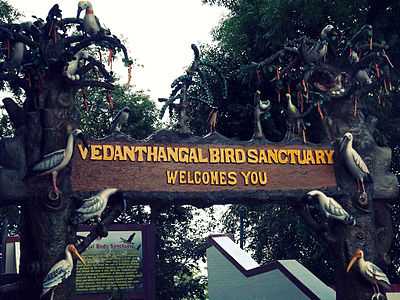
The Vedanthangal bird sanctuary is the smallest bird sanctuary in India situated near to the small town of Padalam in the Kancheepuram district in the state of Tamil Nadu. But this oldest sanctuary carries an amazing history behind it. The sanctuary is preserved by the local people for over 250 years as they have found that the water that contains birds' muck mixed with it can prove as best natural fertilizer for the crops. The place was granted the legal protection in 1798 and in 1936 it was declared as a bird sanctuary. Later in 1972, under the wildlife protection act, the place was declared as a wildlife sanctuary. Every year during Vedanthangal bird sanctuary season around 30000 birds visits this area. Around 115 spices of birds have to be recorded at the Vedanthagal bird sanctuary. The birds like herons, egrets, storks and spoonbills visit here every year. 
Related image

Related image

Vedanthangal bird sanctuary season


The climate of Vendanthagal bird sanctuary is very hot and humid during the summer season that is from the months of March to July. But the weather is cool and pleasant during the winter season. The months from August to October are monsoon months and heavy rainfall is noted during this period. Due to heavy rain, this period is not advisable for bird watch and nature photography. If you wish to visit Vedanthangal bird sanctuary the best season is from the month of November to March. This period is the nesting season for migratory birds and you can enjoy seeing a lot of common and rare birds here. Also, the weather remains enjoyable during this time.


Facilities and attractions


You can plan a family picnic during the weekend to this amazing place. The place is well structured with paved paths and watchtowers and benches for the bird watchers. You can take a close view of the bird activities from here. Visitors are advised not to disturb the birds and stay quiet in the corner to watch every activity of the birds. Karikili bird sanctuary is another place of attraction at the distance of just 9 km from Vedanthangal sanctuary. People visit here early in the morning for bird watching.


 get way to vedathangal

Mudumalai National Park

Mudumalai National Park


Image result for Mudumalai National Park
The Mudumalai Sanctuary is an important wildlife habitat due to its strategic position as a Wildlife corridor between several other protected areas making an essential part of the Nilgiri Biosphere Reserve. Its north is being crusted with Bandipur National Park and Nagarhole National Park and at its west is the Wayanad Wildlife Sanctuary along the south corner is flourished with Mukurthi National Park and Silent Valley National Park. These parks, sanctuaries and the adjoining Reserve forests cover over 3,300 sq kms of forest supporting a population of 1800–2300 elephants.

Related image

Attractions in Madumalai

Moyar River - running through the dense forest this river is an ideal place to cite animals when they come to drink water along its bank.
Moyar River Gorge - also called the Moyar Canyon, is a dramatic 20 km long gorge dug out by Moyar River that plunges into the gorge below Theppakadu in a roaring water-fall. This fall is popularly known as the Moyar falls.
Elephant Feeding Camp - this is the place where one can interact with elephants and see how they are fed. The captive elephants in the sanctuary are no longer used for timber extraction work, since these areas are managed exclusively as protected areas. The elephants are engaged mainly for Eco-tourism, patrolling for anti poaching operations, to control Man-Elephant conflict outside the sanctuary or other areas and as a conservation and training centre for elephants which can be visited by the public.
Madumalai Museum - lying near the Elephant feeding camp, this museum is the perfect location where some animals (who once lived in the Mudumalai Jungle) are preserved.
Kallatty falls - located 30 km from Theppakadu, is a beautiful falls with a magnificent view for leisure treatments.
Pykara Lake - Located 40 km (25 mi) from Theppakadu is a clean and scenic lake aligned between the hills. It is an inaccessible lake, free from pollution and crowds where the tourists can enjoy boating. An annual summer boat race was introduced to this lake in 2008.
Besides these attractions, many scenic spots in the sanctuary are available like the Chief Minister's Watchtower, the view point at Kargudi and the Ombetta Lake. There are multiple safari van rides on Sand Road, Circular Road, Manradiar Road, Jayadev Avenue and Bombax Road for more adventurous fun. The public roads like Kakkanalli – Torapalli road, Teppakkadu – Masanagudi road and Moyar – Masanagudi road are also worthwhile places to catch wild life in the Sanctuary.
Image result for Mudumalai National Park


Best Season to Visit Mudumalai National Park

The best time to visit the park is from February to June. During this season, animals come to watering holes and lakes to quench their thirst. Spotting animals near water sources become easier. Bird population is highest during this season due to migration. The vegetation sheds its leaves and will be completely covered with flowers. This is the best season for photography. June to August is the worst time to visit the park.

Image result for get direction icons

Chitrangudi Bird Sanctuary

Chitrangudi Bird Sanctuary


Image result for Chitrangudi Bird WLS 

Kanjirankulam Bird Sanctuary is in Ramanathapuram District in Tamil Nadu. It is a 1.04 km2 (0.40 sq mi) protected area near Mudukulathoor declared as sanctuary in 1989. Geographical Position is 9°20N 78°29E. It is adjacent to Chitrangudi Bird Sanctuary. It is notable as a nesting site for several migratory heron species that roost in the prominent growth of babul trees there. International name: Chitrangudi and Kanjirankulam Bird Sanctuary

Image result for Chitrangudi Bird WLS
The bird sanctuary was declared in the year 1989, with an estimated area of 66.66 hectares in Keela Kanjirankulam and 37.55 hectares in Mela Kanjirankulam. The sanctuary area is within the community tank embankments and its immediate water holding channel, measuring approximately 15 meters from the bottom of the embankment. Most notable feature of the sanctuary area is the prominent growth of Babul (Acacia nilotica) trees.


It is located 5 km from Mudukulathoor and 25 km from Paramakudi, in a drought prone area. The floral diversity is very poor and the area seems to be scrub jungle type. The area has been planted with Prosopis chilensis and Acacia nilotica in the villages and around the tanks; the two species were introduced and planted by the Forest Department on a massive scale to sustain firewood collection. Tamarind Tamarindus indicus is the only common tree, seen sporadically on the roads and the tank bunds. Due to the nature of the soil and scanty rainfall, the natural vegetation is sparse.
Image result for Chitrangudi Bird WLS


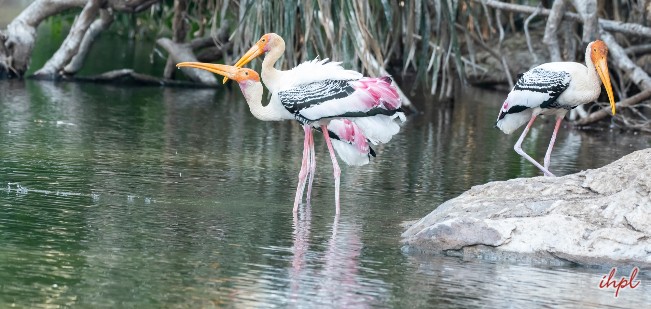
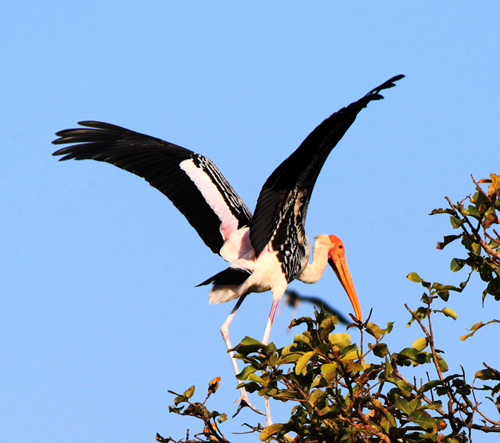
The bird sanctuaries receive nearly 170 species of birds. Breeding population consists of Painted stork, White Ibis, Black ibis, little egret, large egret. The site qualifies as an IBA as the threatened Spot-billed Pelican Pelecanus Philippensis breeds here. A maximum of 100 birds reportedly breed, i.e 2.5% of the species biogeographical population at the 1% level of 40 birds (Wetlands International 2002). Chitrangudi and Kanjirankulam Bird Sanctuary are two of the oldest known pelicanries in the state. Since time immemorial, the locals have protected both the pelicanries. In January 1988, in Chitrangudi Sanctuary, 934 Pelicans and 100 nests were found (Birdlife International 2001). Johnson et al. (1993) have seen 700 pelicans in January 1989 and 286 in 1991 in the same tank.
Image result for Chitrangudi Bird WLS

Besides the Spot-billed Pelican, the Asian Openbill Anastomus oscitans, Little Egret Egretta garzetta, Large Egret Casmerodius albus, Grey Heron Ardea cinerea, Purple Heron Ardea purpurea, and Indian Pond Heron Ardeola grayiiare known to breed in both villages. In Kanjirankulam, Abraham (1973) found Painted Stork Mycteria leucocephala breeding on the same trees as pelican’s nests were found. During his visit, the nesting colony was on 60 trees, mainly Ficus religiosa, Thespesia populnea and Acacia arabica. He also found nesting colonies of Oriental White Ibis Threskiornis melanocephalus and Black Ibis Pseudibis papillosa, about 1.6 km away from Kanjirankulam.
Due to the presence of scrub jungle and surrounding agricultural fields, the vegetation cover does not permit the presence of large or medium sized mammals.


vaduvoor bird sanctuary

vaduvoor bird sanctuary Vaduvoor Bird Sanctuary is located in Thiruvarur district of Tamil Nadu. The nearest city, Thanjavur, is locat...