Tamil Nadu now has an exclusive sanctuary for spotted deer with the State government notifying the formation of Gangaikondan Spotted Deer Sanctuary.
An order from the Environment and Forests Department said this follows an announcement this May by Chief Minister Jayalalithaa in the Assembly that the sanctuary in Tirunelveli district would be formed in the current fiscal.
With this, there would be 11 wildlife sanctuaries in the State.
Subsequently, the Principal Chief Conservator of Forests and Chief Wildlife Warden sent necessary proposal for declaration of Gangaikondan Spotted Deer Sanctuary under the Wildlife (Protection) Act, 1972 and it was accepted by the government with effect from October 1.
According to the notification, the Gangaikondan reserve forest is an important habitat for spotted deer. This is the southern most habitat of spotted deer outside the Western Ghats. It is also a habitat for peafowls, mongoose, varied reptiles, avifauna.
There is adequate ecological, faunal, floral, geo-morphological, natural and other zoological significance for the purpose of protection, propagation and management of the wildlife and its environment.
Forest officials said the sanctuary is spread over in 250ha and surrounded by patta lands. Due to this a perimeter wall has to be built around the sanctuary area. The forest type is dry deciduous and scrub jungle, which is strategically located on the National Highway 7 and 10km away from the Tirunelveli town.
The department proposes to introduce eco-development activities by involving the locals. The activities included skill development for youth, asset creation and micro enterprises for livelihood, the authorities added
The wildlife rich state Tamil Nadu houses 5 national parks, 14 wildlife sanctuaries and 14 bird sanctuaries. According to reports the area falling outside Kalakkad Mundanthurai Wildlife Sanctuary i.e Tirunelveli forests and the Ousteri Lake was waiting the approval from the government for a long period. Let us learn about this 15th bird and wildlife sanctuary in detail; so that the next time you are in Tamil Nadu you do not miss out on visiting this exotic place.
A tiny village in the far south, Koonthankulam in Nanguneri Taluk of Tirunelveli District is emerging as a new favourite of the migratory birds. It is just 38 Kms. away from Tirunelveli and is in the nearby Nanguneri Taluk. It may soon be catapulted into the list of popular water bird sanctuaries in the country. This village is sparsely populated. Migratory birds start coming by December end and fly away to their northern homes by June or July after they lay eggs, hatch them and the young ones grow old enough to fly with the older ones. About 35 species of birds visit this calm but congenial village for breeding.
The birds called Painted strokes are coming from North India and East European Countries to this place. Similarly the flamingoes which flew in mainly from the Rann of Kutch have hatched and reared their young ones in the village.
The birds coming to their backyards for five generations are protected vehemently by villagers and regarded as harbingers of luck. The excreta of birds –‘guano’ is collected by villagers in summer along with silt to use as fertilizer in their fields. From children to grannies in the village all protect them, their nests and fledgelings. Chicks fallen are taken care of in the rescue centre till they are able to fly on their own. Anybody troubling the nests are punished inn their own methods of shaving the head, or making the procession on donkey
Kanjirankulam Bird Sanctuary is in Ramanathapuram District in Tamil Nadu. It is a 1.04 km2 (0.40 sq mi) protected area near Mudukulathoor declared as sanctuary in 1989. Geographical Position is 9°20N 78°29E. It is adjacent to Chitrangudi Bird Sanctuary. It is notable as a nesting site for several migratory heron species that roost in the prominent growth of babul trees there. International name: Chitrangudi and Kanjirankulam Bird Sanctuary, IBA Code: IN261, Criteria: A1, A4i.
The bird sanctuary was declared in the year 1989, with an estimated area of 66.66 hectares in Keela Kanjirankulam and 37.55 hectares in Mela Kanjirankulam. The sanctuary area is within the community tank embankments and its immediate water holding channel, measuring approximately 15 meters from the bottom of the embankment. Most notable feature of the sanctuary area is the prominent growth of Babul (Acacia nilotica) trees.
It is located 5 km from Mudukulathoor and 25 km from Paramakudi, in a drought prone area. The floral diversity is very poor and the area seems to be scrub jungle type. The area has been planted with Prosopis chilensis and Acacia nilotica in the villages and around the tanks; the two species were introduced and planted by the Forest Department on a massive scale to sustain firewood collection. Tamarind Tamarindus indicus is the only common tree, seen sporadically on the roads and the tank bunds. Due to the nature of the soil and scanty rainfall, the natural vegetation is sparse.
Flora
The sanctuary vegetation can be classified generally as that of Tropical Dry Deciduous type. It is dominated by Babul (Acacia nilotica) along with Prosopis juliflora and grasses such as Cynodon dactylon and Eremopogan faveolatus. Prosopis is slowly encroaching large extent of the sanctuary area and is retarding the growth of Babuls. The tank bund and the area outside the tank are having Tamarindus indica, Ficus Spp., Neem, (Azadirachta indica), Thespesia Populnea, Albizzia amara, Moringa oleifera and Palmyra (Borassus flabellifer)
.
Fauna
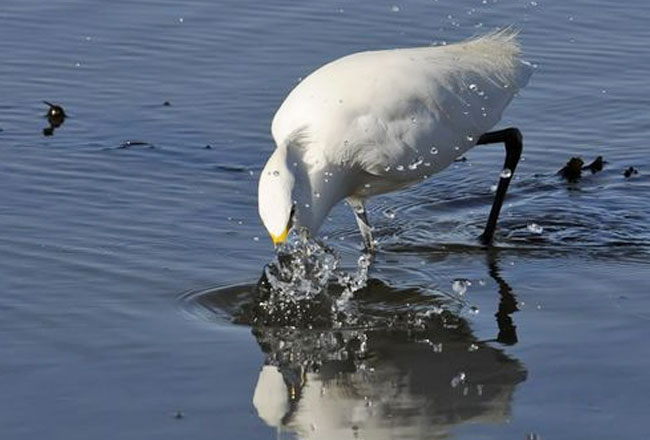
The sanctuary also offers ideal habitat for several winter migratory birds. Some of them include Painted stork, White ibis, Black ibis, little egret, Great egret. These birds can be mainly seen here during the months between October and February. The Kanjirankulam Bird Sanctuary has with considerable diversity in nesting and feeding behaviors. Heronry species, a colonial bird can be seen here in huge numbers. The sanctuary is visited by almost 170 species of birds. The wetland here is irregular in depth and holds water for 3 to 5 months when the rain is normal.
Uniqueness:It is the 2nd largest brackish water lagoon in India after Chilka lake in Orissa
The sanctuary lies exactly within 11°30’N to 11°42’N and 76°30’E to 76°45’E. The average rainfall of this region ranges between 800 and 2000mm. The temperature of this sanctuary lies between 14°C and 33°C. The altitude of this sanctuary ranges between 100’ MSL and 1200’ MSL. There is greatest threat to this region as there is a chance for this lake to disappear in next 100 years because of silt formation. Both private Non government organization and Indian government are doing their best to halt the destruction of this lake.
This bird sanctuary attracts many bird waters from other parts of India, especially at weekends. The lake is about 60 km and width varying from 0.2 km to 17.5 km.
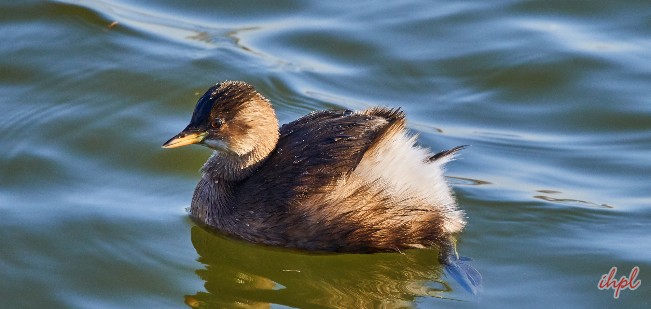
The lagoon is an important habitat for 160 species of fish, 25 species of polychaetes worms, 12 species of prawn, 19 species of mollusk, 100 species of birds both terrestrial and aquatic birds and small mammals and reptiles. Migratory birds mainly from Central Asia and Eastern Europe, visits this sanctuary. The sanctuary mainly attracts Greater and Lesser Flamingoes, Grey Pelican, Painted Stork, Grey Heron, Ducks, Marbled teal, Terns, Egrets, Kites and Partridges, Quails, Sea Gulls and a number of Waders such as curlews, stilts, plovers, sand pipers, lapwings and redshank. . During the winter season, the sanctuary attracts up to 15,000 flamingoes.
Some of the commonest wetland birds include Shoveler, Garganey, Gadwall, Marsh Sandpiper and Black-tailed Godvit. Some of the resident birds listed are Grey Pelican and Open-billed Stork. The lake is also home to crabs, clams, mussels, oysters, snails, fish worms, insects, spiders, sponges, anemone, prawns, plankton and so on
Pulicat Lake is the second largest brackish – water lake or lagoon in India. It straddles the border of Andhra Pradesh and Tamil Nadu states on the Coramandel Coast in South India. The lake encompasses the Pulicat Lake Bird Sanctuary. The barrier island of Sriharikota separates the lake from the Bay of Bengal. The island is home to the Satish Dhawan Space Centre.
Pulicat Lake, an ecologically fragile salt-water lagoon, about 60 kms north of Chennai, is the second largest lagoon in India. It is situated on the route taken by migrating birds, tempting them to stop for a break. The lake is separated from the Bay of Bengal by a strip of land, in which the town of Pulicat is located.
Point Calimere Wildlife and Bird Sanctuary (PCWBS) is a 21.47-square-kilometre (8.29 sq mi) protected area in Tamil Nadu, South India along the Palk Strait where it meets the Bay of Bengal at Point Calimere (Tamil: கோடியக்கரை Kodiakkarai) at the southeastern tip of Nagapattinam District. The sanctuary was created in 1967 for conservation of the near threatened blackbuck antelope, an endemic mammal species of India. It is famous for large congregations of waterbirds, especially greater flamingos.[1] International name: Point Calimere Wildlife Sanctuary, IBA Code: IN275, Criteria: A1, The 7-square-kilometre (2.7 sq mi) core area of this sanctuary has been proposed as a National Park
Fauna
This sanctuary is an area of high biodiversity, with many unique species of animals and birds. See photos
Land animals
PCWBS is inhabited by fourteen mammal species, eighteen reptile species and nine amphibian species.
Blackbuck antelope, PCWBS's flagship species
The flagship species of the sanctuary is the near threatened blackbuck antelope, one of the four antelope species in India (Chinkara, Chausingha and Nilgai being the other three) and the most numerous large animal in the sanctuary. The population estimate of the blackbuck at Point Calimere more than doubled in thirty years, from 750–800 in 1967 to 1,908 in 1998/99. This isolated population of blackbuck probably survived unmolested throughout the centuries due to the locals' now declining belief that eating its meat causes leprosy. The predators of the blackbuck at Point Calimere are jackals, and sometimes village dogs. Competition for food is from domestic and feral cattle.
Other notable animals include: spotted deer, jackal, bonnet monkey, wild boar, monitor lizard, short-nosed fruit bat, small Indian civet, star tortoise, Indian grey mongoose, black-naped hare, jungle cat and feral pony.
Marine animals
Bottlenose dolphin is frequently seen along the shore of the sanctuary in morning and evening hours during the winter. The shoreline beaches of the sanctuary are a regular nesting site of the endangered olive ridley turtle. In 2002 a pair of Bryde's whale were found washed ashore near the sanctuary. One 10 ton 35-foot whale was successfully towed back to sea.
Flight of painted stork at PCWBS
List of birds at PCWBS
This was the first successful rescue of a beached whale in Asia.
Waterbirds
This site has recorded the second largest congregation of migratory waterbirds in India, with a peak population in excess of 100,000, representing 103 species. Bombay Natural History Society researchers have captured, studied, ringed and released over 200,000 birds during the course of several ornithological studies here in the past several years.
In October these waterbirds arrive from Rann of Kutch, Eastern Siberia, Northern Russia, Central Asia and parts of Europe for their feeding season and start returning to those breeding places in January. These waterbirds include threatened species such as spot-billed pelican, Nordmann's greenshank, spoonbill sandpiper and black-necked stork. Near threatened species include black-headed ibis, Asian dowitcher, lesser flamingo, spoonbill, darter and painted stork.
Landbirds
Brahminy kites and slender billed gulls at PCWBS
Over 15 square kilometres (5.8 sq mi) of the best tropical dry evergreen forest in India
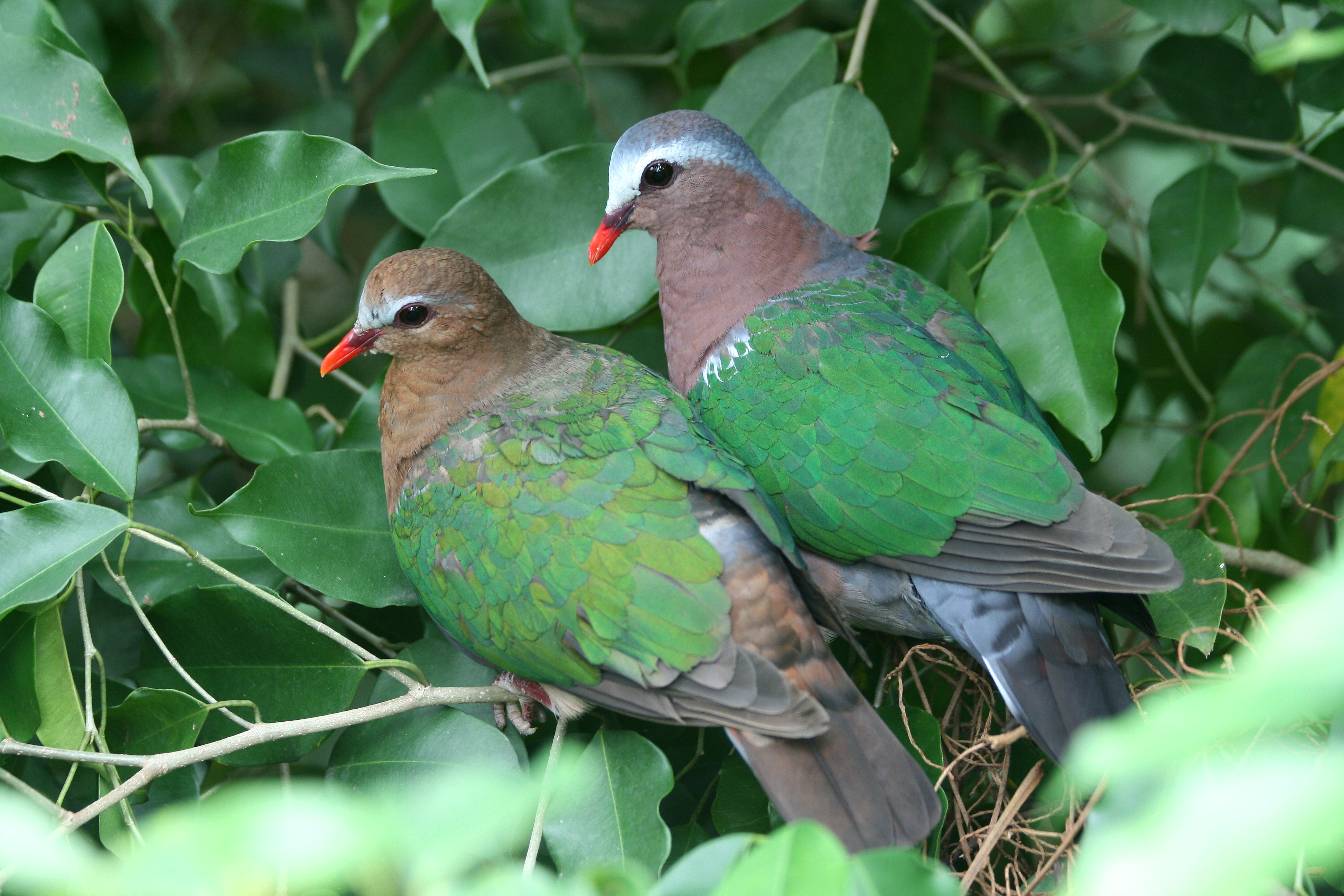
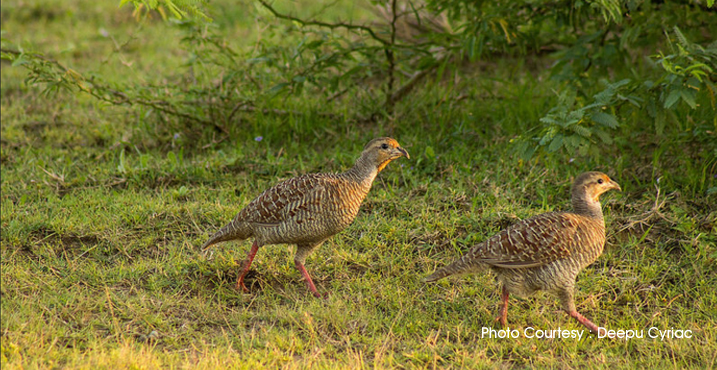
are in the sanctuary. They harbour a large variety of resident and migratory landbirds. The most common of the 35 resident species are white-browed bulbul, brahminy kite, small green-billed malkoha, crow pheasant, rose-ringed parakeet, grey partridge, blue-tailed bee-eater and common iora.
Spotted and collared doves are common in the mangroves.
Flora
Mangrove forest at Muthupet
This site is a mix of salt swamps, mangroves, backwaters, mudflats, grasslands and tropical dry evergreen forests. 364 of flowering plant species have been identified in the sanctuary of which 50% are herbs and the others are climbers, shrubs and trees.
About 198 of these have medicinal properties. Manilkara hexandra, locally called Palai is the dominant dry evergreen species and an important food source for fruit eating birds. Middle canopy is dominated by the invasive Prosopis juliflora and the most abundant undergrowth is Memecylon umbellatum.
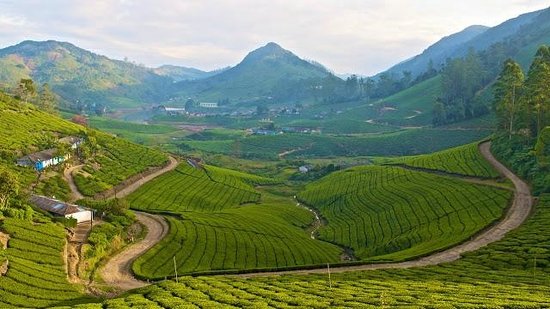
Megamalai Wildlife Sanctuary is one of the famous tourist attractions of this region which is spread in an area of 600 square Kms. This Sanctuary is very famous for its different type of mammals, butterflies, birds and reptiles species. The garden of coffee and tea attracts a large number of tourists in all over India and is a perfect destination to spend holidays.
Salim Ali Centre for Ornithology and Natural History (SACON) has recommended the expansion of Meghamalai Wildlife Sanctuary in Theni district to boost conservation in the southern Western Ghats.
After conducting studies on distribution, abundance and conservation of primates and mammals in the Meghamalai landscape for sixty years, the SACON scientists have strongly recommended the creation of a new wildlife sanctuary or expansion of the existing 269.11 sq.km sanctuary as many wildlife habitats are outside the protected area.
According to the findings, large tracts of natural forest was given on lease to different companies for a fixed period long back in upper Manalar, Vellimalai, Ammagajam. These contiguous forests were converted as commercial plantations such as tea, coffee and cardamom but are interspersed with rainforests harbouring high diversity of animals, including large mammals.
As this is an area where large portion of high elevation forests (above 1,400m) still persist supporting high richness of endemic and threatened vertebrates, the SACON scientists have recommended that the lease period of these estates should not be further extended and should be gradually acquired and restored.
For instance, the mean group size of the lion-tailed macaque (LTM) is 33.25, which is much higher than many other forests including Silent Valley and Anamalai hills.
“Although the number of groups is small (eight), the minimum population size of 266 individuals is very promising,” says Honnavalli N. Kumara, a SACON scientist involved in the studies.
In all, the SACON scientists recorded 63 species of mammals belonging to 24 families of which 24 were globally threatened with one critically endangered.
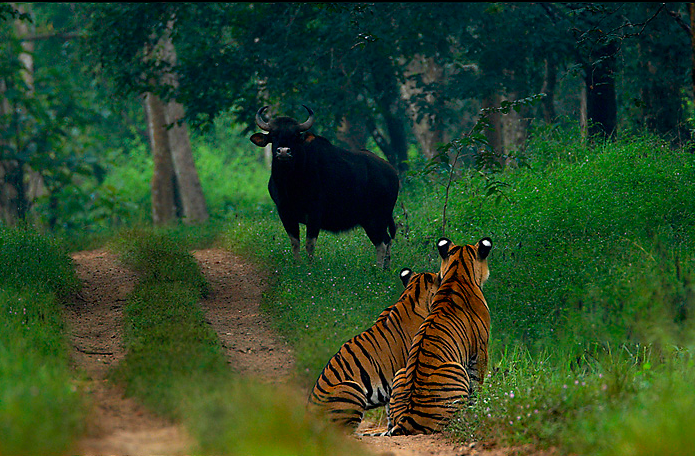
Direct and indirect evidence of tigers were mostly restricted to western plateau of the landscape, the results show. Noting that the area also experiences severe interruption of locals for cattle grazing which increases the chance of spreading diseases from cattle to wild ungulates, the SACON scientists caution that this could become a serious issue for prey base of tigers in the adjoining Periyar Tiger Reserve (PTR).
Increasing protection in the landscape would also reduce the hunters entering PTR through these forests that would facilitate tigers to occupy the landscapes of Meghamalai, Highwavys and Varusanadu ranges. The “highly exploited” Varusanadu valley and hills is a potential patch for ‘Conservation Reserve’ program, Mr. Kumara says.
There are about 1,802 encroachments in the range covering 2,060 hectares according to forest working plan 2004-2014. The lands were encroached to create monoculture plantations (silk cotton) three to four decades ago.
As resettling the encroachers will be a troublesome work and that will lead to conflict between forest department and local residents, SACON scientists have suggested it be made a Conservation Reserve so that people inside the valley will not be evicted and at the same time biodiversity of the landscape could be maintained.
There is a long-pending proposal with the Tamil Nadu Forest Department to establish the Megamalai Wildlife Sanctuary on 600 km2 of forest in the division. Priority tasks in the sanctuary should be the control of poaching and the use of pesticides, the elimination of ganja (Cannabis sativa) and the cultivation and scientific management of watersheds. The Megamalai Wildlife Sanctuary can be an excellent buffer to the Periyar Tiger Reserve and Grizzled Squirrel Wildlife Sanctuary and can immensely strengthen conservation in the southern Western Ghats, the range of hills south of the Palakkad Gap.[2]